
The Dispatch Operator's Tech Stack in 2026: Stop Juggling, Start Trusting
If you are a Lagos dispatch operator, then your day is most likely a juggling act. WhatsApp groups for job requests. A notebook for addresses. A calculator for prices. Your memory for who has paid. Your phone ringing while your rider waits at a junction. Sound familiar?
That is not really running a dispatch business. That is surviving one scattered message at a time. And while you are juggling, vendors with valuable and expensive goods are giving their deliveries to operators who look more organised. This is not about buying fancy software or becoming a tech person.
By the end of this guide, you will know the six tools your operation actually needs in 2026, why patching WhatsApp and spreadsheets together can cost you valuable jobs, and how to build a simple system that gives vendors a reason to trust you with their most expensive items.
A Familiar Lagos Dispatch Story
Meet Tobi. He runs a growing fleet in Lagos. He started with two bikes. Then came referrals, more jobs, and more dispatch riders. Soon, his operation covered places like Ikeja, Yaba, Surulere, Lekki, and Victoria Island. But Tobi still ran the business with WhatsApp, a worn notebook, and pure memory. One month, he lost two valuable clients.
The first was a phone shop in Computer Village. The second was a fashion seller in Surulere. Both clients had sent expensive items through his riders before. So why did they leave? They could not get clear tracking. They could not get proper proof of pickup or delivery.
When a customer said an item was missing, Tobi had to search old chats and call the rider. The answer was always late. Then Tobi joined his best rider for a day. He saw the real problem. Tobi was so busy hunting for job details across chats that he had no time to run the business. The fix was not a bigger phone. It was not simply hiring more riders.
It was putting the whole job in one live system. When your tools do not talk to each other, you become the connection between them. That is where mistakes, delays, and lost trust begin.

Consolidation Beats Chaos
How many tools do you really need? Many operators use WhatsApp, notebooks, spreadsheets, calculators, phone calls, and memory to complete one delivery. That may work when you have a few jobs. It becomes risky when you have several dispatch riders moving valuable products across Lagos at the same time.
In Lagos, “gut feeling” can mean remembering which rider collected cash. It can mean guessing whether a customer received an item. It can mean choosing a rider for a ₦200,000 delivery because he replied first. That is not a safe system. You do not need dozens of apps. You need a few connected tools that show the same job details to the right people.

Why WhatsApp and Spreadsheets Don’t Cut It
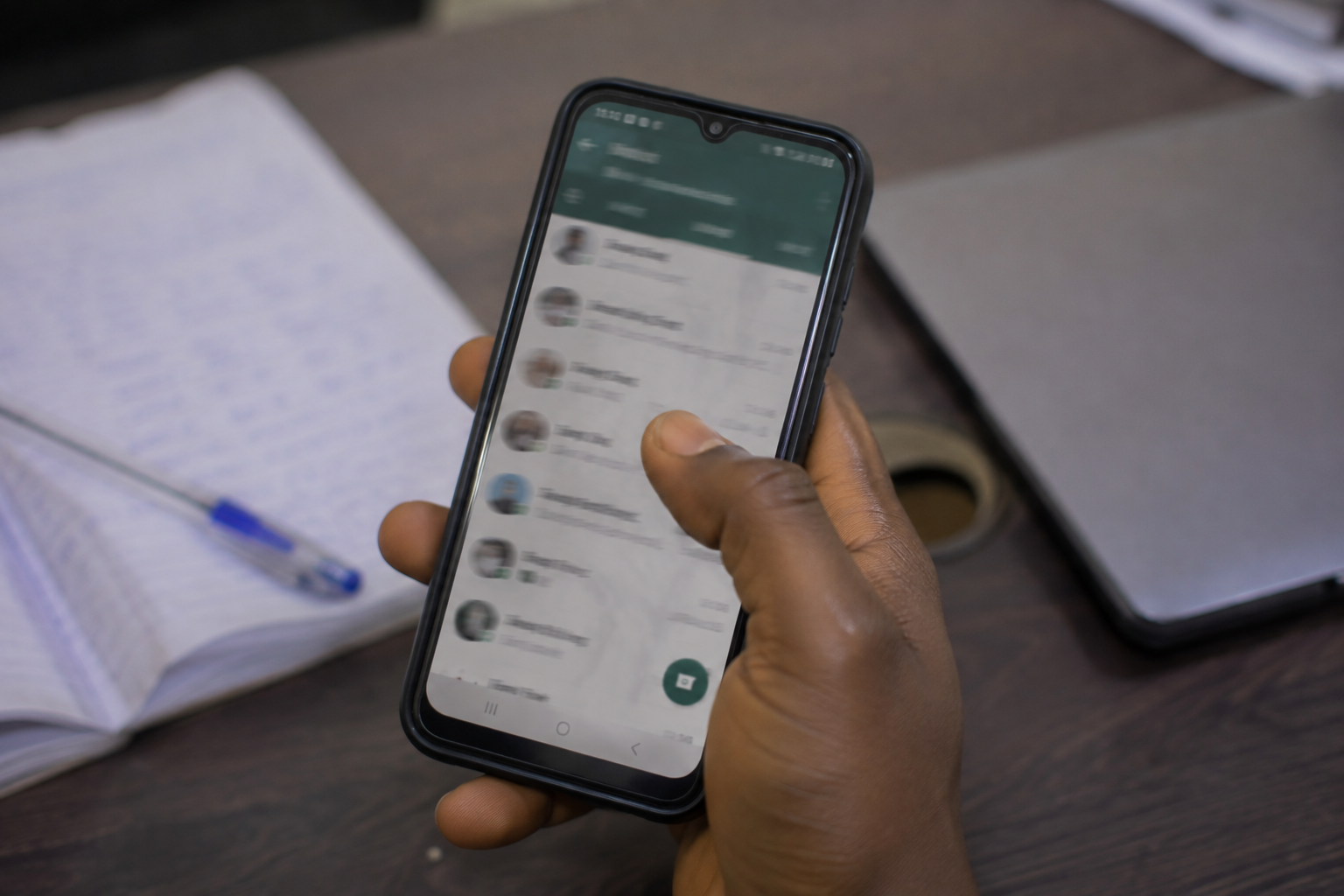
Let us be clear. WhatsApp is useful. It helps you speak with customers and dispatch riders. But WhatsApp is a chat app. It is not a complete delivery system. A message can get buried. An address can change without everyone seeing it. A price can be remembered differently by the operator and the rider.
A photo can sit in one phone while the customer asks for proof in another chat. Spreadsheets have the same problem. They can hold information, but they do not automatically show what is happening on the road now. Delivery work moves too fast for scattered records.
68% of freight decision makers used five or more systems each day; 69% cited fragmented data as a major challenge. 83% said they worked in reactive mode and 59% reported financial impact from manual operational errors in the previous 12 months. This was a global freight study.
Still, the lesson is simple. When job information is spread across chats, notebooks, and calls, your operation becomes reactive. You do not prevent problems. You wait for someone to call and complain. WhatsApp is for talking about a delivery. A proper system controls it.
Visibility Is The New Margin
Visibility means knowing what is happening before the vendor has to ask. Where is the rider? Has pickup happened? Is the rider delayed? Has the customer received the package? Which jobs are still open? Which routes are taking too long? Which jobs are profitable? When you can see these things, you can act early.
You can warn the vendor before the complaint comes. You can send help before the rider gets stuck. You can protect the account before a small delay becomes a lost client. Without visibility, you only see the problem after the damage. A vendor messages:
“Where is my phone?” You start calling. The rider does not answer. You search WhatsApp. The vendor becomes angry. The customer loses trust. This is why a trackable delivery Lagos operation has an advantage over a random rider with only a phone number. The value is not just the map. The value is the calm answer.

Build A Real-time Mindset
A notebook shows what happened earlier. A spreadsheet may show what someone entered this morning. But delivery work is about what is happening now. Traffic changes. Addresses change. Customers miss calls. Riders take wrong turns. A vendor with a valuable package needs current info
63% of shoppers value real-time tracking and updates, and 29% would permanently stop buying from a retailer if there was no real-time tracking. This shows where customer expectations are going. For a same-day delivery service Lagos operator, real-time updates are no longer a luxury. They are part of the service. The vendor should not need to call five times to know where the package is. Your system should answer first.

Less Paper. Still Human.
Technology should not remove human judgment. It should remove repeated work. You still decide which rider is best for a job. You still handle difficult customers. You still solve problems when Lagos traffic changes the plan. But your system should handle the boring parts.
It should keep the job details together. It should record the agreed price. It should capture pickup and drop-off photos. It should collect OTP confirmation from the recipient. It should save timestamped records for later. This matters because memory is weak when the day is busy.
A photo can show the package condition at pickup. Another photo can show what happened at drop-off. An OTP can show that the right recipient confirmed delivery. That is better than arguing over what someone remembers. Automation does not replace the operator. It gives the operator room to think.

Your Tech Stack Is A Culture Choice
The tools you use tell vendors how you work. If every job lives in a different chat, your operation feels uncertain. If prices change after pickup, vendors feel exposed. If there is no proof, vendors carry all the risk. But when you use structured jobs, locked pricing, real-time tracking, photo proof, and OTP confirmation, your operation feels controlled.
That matters when you want work from logistics companies in Lagos, online sellers, phone shops, fashion brands, and businesses shipping expensive products. A cheap rider may win one delivery. A trustworthy operation wins the account. Professionalism is not only a clean uniform or a branded bike. It is the proof behind every delivery.

The Go SendAm Stack For Operators
Go SendAm connects Lagos vendors with verified same-day dispatch companies. The goal is simple: fewer scattered tools and more trust around each job. The Go SendAm stack brings together:
A verified dispatch company profile:
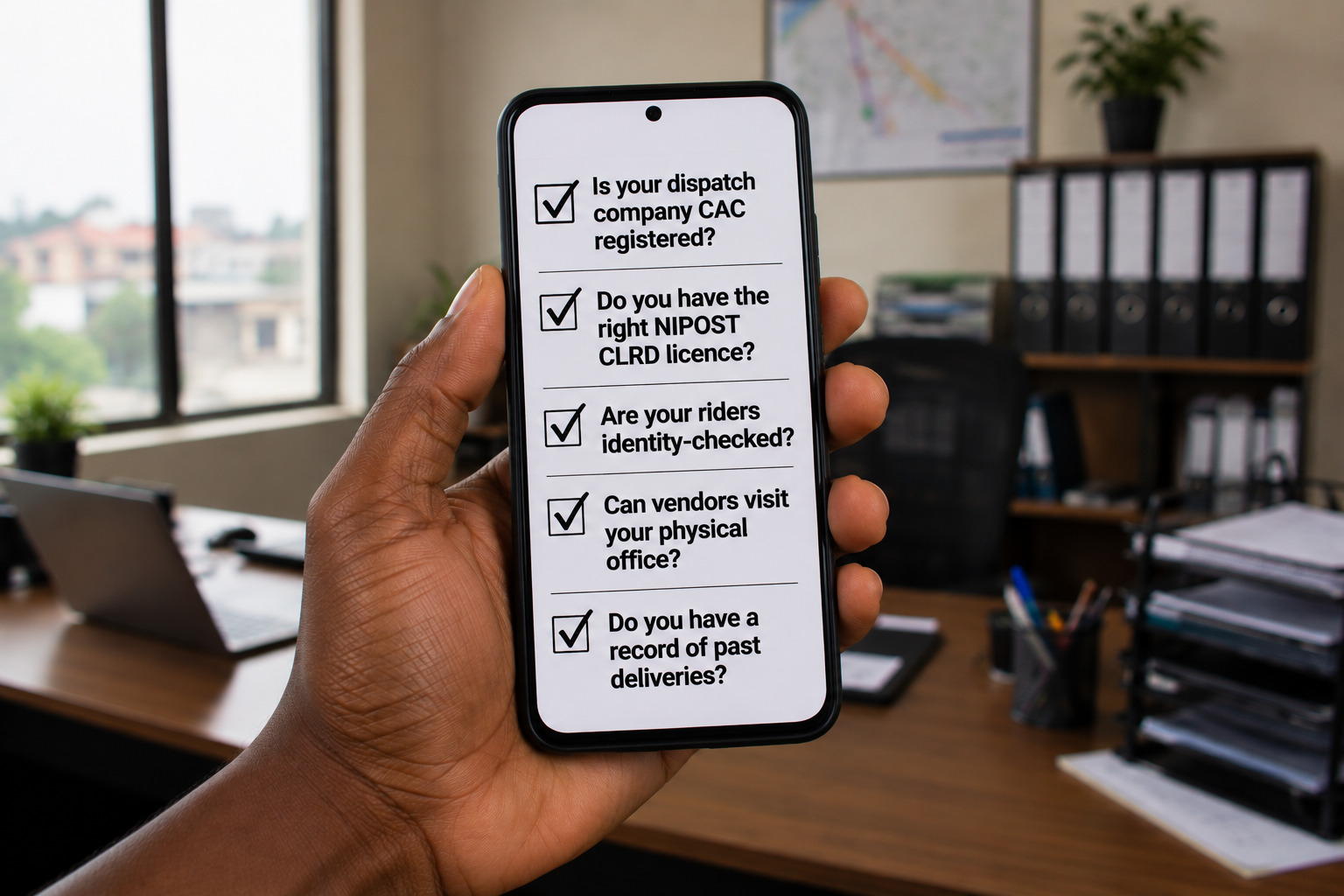
Dispatch companies on the platform are checked against CAC records, NIN details, physical office address, and delivery history.Structured jobs:
Pickup details, drop-off details, package information, and instructions stay together.Locked pricing:
The price is bargained and agreed before pickup, so there is less confusion later.Timeline Updates:
Both the vendor and customer can follow the delivery as it moves.Automatic photo proof:
Photos are captured at pickup and drop-off to create a clear record of the package journey.OTP confirmation:
The recipient confirms delivery with a one-time password.Permanent timestamped records:
The delivery history remains available if a dispute comes later.
This is useful for operators serving Computer Village delivery service needs, fashion sellers, repair shops, pharma distributors, and other businesses that need secure shipping Nigeria can rely on. It is also useful for vendors searching for a safe courier for electronics, delivery for online vendors in Lagos, and verified dispatch riders for high-value jobs.

Quick Operator Checklist
Ask yourself:
Can I see every active job in one place?
Do I know which rider has each package?
Are my dispatch riders properly verified?
Do I record the agreed price before pickup?
Can vendors track deliveries in real time?
Do I capture pickup and drop-off photo proof?
Do recipients confirm delivery with OTP?
Can I settle a dispute with timestamped records?
Can vendors find and trust my operation?
Am I still using memory to manage valuable goods?
If you answered “no” several times, do not panic. Start with one change. Move from scattered messages to structured jobs. Then add tracking, proof, and clear records. Small changes can make your operation calmer and more professional.
Read Next
Dispatch Operators Discovery: What You Need As A Dispatch Operator in 2026
Delivery Trouble: How WhatsApp Kills Your Dispatch Operations In Lagos
Safe Courier For Vendors: Why Random WhatsApp Riders Are Costing You Thousands Of Naira
You do not need more tools. You need tools that talk to each other. You need a system that makes vendors trust you with their most valuable goods. You don’t need 50 tools. You need a few that talk to each other and a system that makes vendors trust you with their most valuable goods.
