
Cash Leakage: How Much Is Your Dispatch Business Losing Every Month?
Every evening, you count your delivery money. The number is never as big as the work you did. You did more jobs this week than last week. More bikes went out. More packages moved. But the money in your hand does not match the work. Something is leaking, and you do not know where.
Here is what that leak actually looks like.
A vendor sends you a package. You look at it and quote ₦2,500. That is what you normally charge for a job like this. But if you worked out the real cost- the distance, the vehicle, the size of the shipment- it comes to ₦4,000. That is ₦1,500 gone on one delivery.
Now do that 100 times in a month. That is ₦150,000 you never saw. Not stolen by a rider. Not lost to bad roads. Given away, one quote at a time, by you. This is only an example. Your own number may be higher. It may be lower. But if you have never checked, you will not know until it is gone.
By the end of this article, you will know exactly why this keeps happening, what a real delivery rate is built on, and how to check your own rate in minutes so this stops on your next delivery.
How ₦1,500 On One Delivery Can Become A ₦150,000 Leak.
Let me tell you something: undercharging does not always feel like a loss. The customer pays you. You complete the delivery. Money enters your account. So, everything looks fine. The problem appears when you compare what you charged with what you would have charged if you applied your rates properly.
The difference looks small until you multiply it. That ₦150,000 is not automatically profit. It may be a pricing or revenue gap before fuel, maintenance, rider pay, and other business costs. The point is simple. A small undercharge repeated many times can become a serious amount of money left on the table.
More online orders can mean more delivery work. But more work does not fix weak dispatch business pricing. If you are undercharging, more deliveries may only give you more jobs at the same inadequate rate. Fix the rate before chasing more volume.
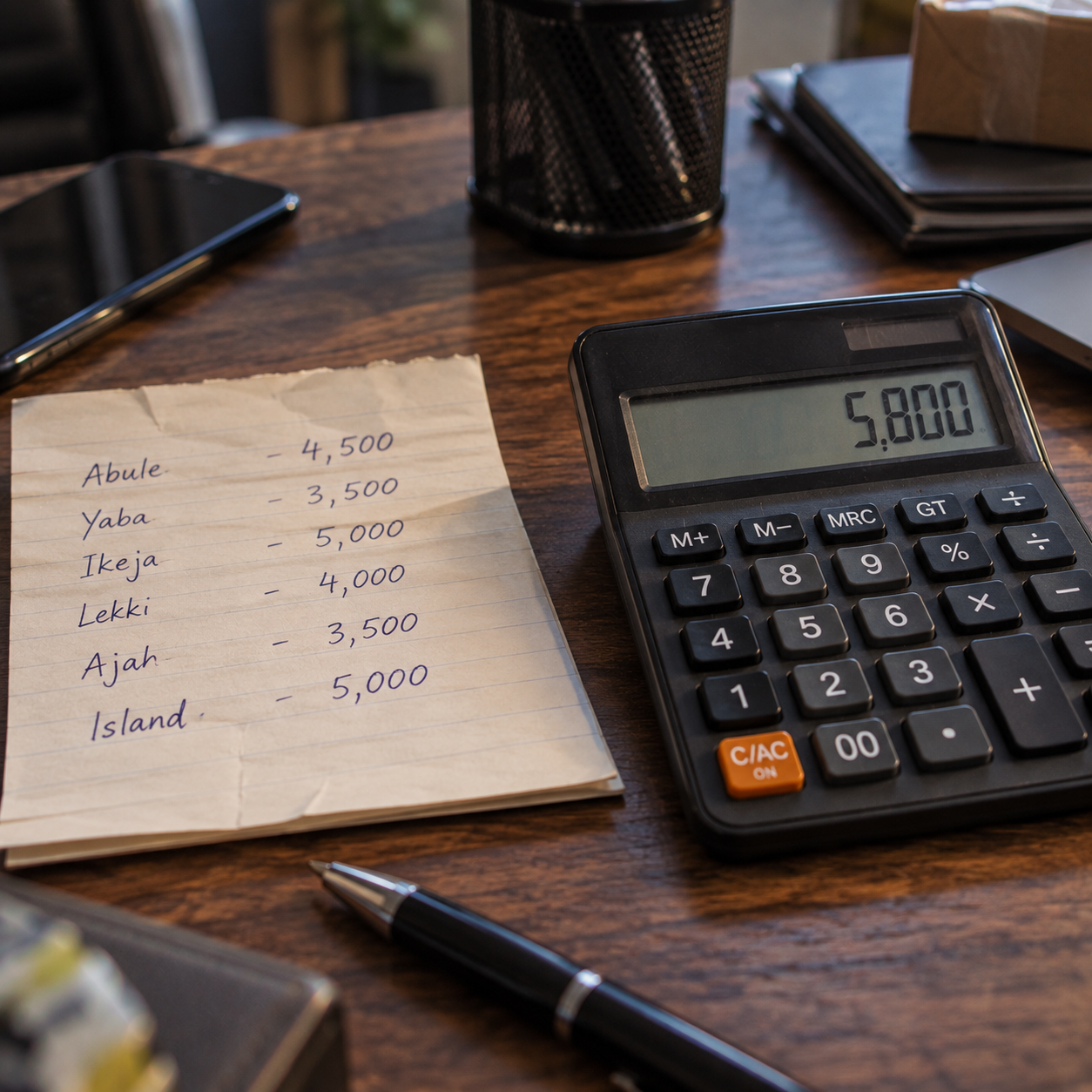
Why Your Usual Delivery Rate May Be Costing You Money
This problem is common. It does not mean you are careless. It often starts with small habits.
You Quote The Price From Memory.
A vendor sends you a message. You check the pickup and drop-off points. Then you quickly say, “₦2,500.” Why? Because that is roughly what you normally charge. But today’s delivery may not be the same as yesterday’s. The distance may be longer. The vehicle may be different. The shipment class may require more space or care. A quick answer can create a slow leak.
You Use One Familiar Rate For Too Many Deliveries.
A small shipment going a short distance is not automatically the same job as a larger shipment going much farther. Yet many operators use one familiar figure for both. This is where dispatch delivery charges can become unclear. Your price should reflect the work involved in that particular trip.
You Copy What Other Operators Charge.
Checking what other dispatch riders charge can give you useful market context. But their price may not work for your business. They may use a different vehicle. Their routes may be different. Their costs may be lower or higher. They may serve different customers. Their rate is not automatically your rate.
You Are Trying Not To Lose The Customer.
Sometimes you give a low price because you want the vendor to accept quickly. That is understandable. But a price that wins the job and does not make sense for your business creates another problem later. You may complete the delivery and still feel like you worked for too little.

What Should Actually Go Into Your Delivery Rate?
Do not pull a delivery price out of the air. Give yourself a simple structure: Distance + Vehicle + Shipment Class. These three points can help you think clearly about how to price dispatch deliveries.
How Much Do You Charge Per Kilometre?
A longer trip can mean more fuel, more time, and more vehicle use. Lagos delivery costs can also change because of congestion and poor addressing.
You should decide how much you want to charge per kilometre based on what makes sense for your business. There is no single ₦/km figure that works for every operator. The important thing is to choose your figure and apply it consistently.
What Vehicle Are You Using?
The vehicle is part of the job. The supported vehicle categories are:
Bike
Tricycle/Car
Bus/Van
A job that needs a Bike may not have the same requirements as a job that needs a Bus/Van. Your rate structure should reflect that difference.
What Kind Of Shipment Are You Carrying?
Your shipment class also matters. The available shipment classes are:
Small
Medium
Large
You decide the flat fee for each shipment class and each vehicle. Do not assume that the value of the item alone decides the delivery price. A phone, laptop, or human hair shipment may be valuable, but your charge should still come from your pricing structure and the actual requirements of the trip.

Now Ask Yourself: Are You Actually Charging Enough?
Think about the last few same-day deliveries you completed for premium shippers. Maybe it was a hair vendor sending an order to a customer. Maybe it was a phone or laptop vendor that needed a quick drop-off. Maybe it was a motor spare parts vendor sending a customer’s order across Lagos.
What did you charge? More importantly, how did you arrive at that number? Did you apply your per-kilometre rate and shipment fee? Or did you simply quote what you normally charge? This is the part many operators avoid checking.

Use the Delivery Rate Calculator to Find the Leak
The GoSendAm Delivery Rate Calculator helps you apply the pricing decisions you have already made. It does not set one universal market price. You remain in control. You decide:
Your per-kilometre rate
The vehicle
The shipment class
The flat fee for that shipment class
The calculator helps you apply those rates to a delivery in a consistent way. Then you can compare the result with what you normally charge. That comparison is where the leak becomes visible.

See How Another Dispatch Operator Does It.
Want to see what this looks like in practice? Watch how a dispatch operator uses the Delivery Rate Calculator to work through their delivery rate.
https://drive.google.com/file/d/1zudafyMayj1CvZxqM52Gu07yQNFZ8-Uv/view?usp=sharing
Check One of Your Recent Deliveries Right Now
Do not start with 100 deliveries. Choose one real premium delivery you completed recently. Then follow these steps:
Step 1: Look at the distance.
Step 2: Identify the vehicle used: Bike, Tricycle/Car, Bus/van.
Step 3: Identify the shipment class: Small, Medium, Large, or Extra Large.
Step 4: Apply the rates you have decided for your business using the GoSendAm Delivery Rate Calculator.
Step 5: Compare the result with what you actually charged the customer.
Now ask yourself: Is there a gap?
If you charged ₦2,500 but your own pricing structure produces ₦4,000, you have found a ₦1,500 pricing gap on that delivery. That does not mean you have found ₦1,500 in profit. It means your business may have charged ₦1,500 less than your own rate structure allowed.
Check a few more deliveries. You may discover that the ₦150,000 example is far from your business. You may discover that it is close. Either way, now you are working with facts instead of guesswork.

Fix the Leak Before Your Next Delivery
Making more money is not always about finding more customers or adding more vehicles. Sometimes, the first thing to fix is what you charge for the work you already do. A ₦1,000 or ₦1,500 gap may look small on one trip. Repeated dozens of times, it becomes significant.
Find out if you have a pricing leak. Use the GoSendAm Delivery Rate Calculator to check your delivery rate before your next trip. Find the leak. Fix your rates. Stop leaving money on the table.