
What To Do In The First 60 Minutes When Your Rider Goes Quiet
If you are a dispatch operator in Lagos… you are familiar with this call already. It is 3:18 p.m. A vendor had given you an item since 9am and still hasn’t gotten it yet. She says, “Where is my package? Your rider is not picking up.” Worriedly, You call the rider. It rings out.
You check WhatsApp. The last message came three hours ago: “I dey go drop am.” That is your whole record. No job reference. No pickup photo. No agreed price written down. No clear route. No idea where the rider actually is. Now the vendor is not only worried about the package.
And you are not only worried about the package also but you are more worried about your reputation and the loss attached to delivery if you can’t get a hold of your rider. Your vendors on the other hand are already losing trust in your business and to worsen it all, they are already looking for another dispatch company to use for their next delivery.
The First Hour Is Your Reputation
Riders move through Lagos traffic. Batteries die. Networks drop. A rider may stop to fix a tyre, answer a police question, or deal with a customer who is not at home. The problem is not always theft or loss. The problem is that, without records, you cannot tell the difference.
The vendor only knows that their expensive item is moving through Lagos and nobody can explain where it is. That is why the first hour matters. Facts are still fresh. People are still reachable. The rider’s last location may still be useful. The pickup details can still be checked.
And the vendor is deciding whether to trust you with the next job. Speed matters. But when something goes wrong, proof matters more.

Minute 0–10: Get The Job File Straight
Do not start by arguing with the vendor about price, location, size of the item e.t.c. Start with the facts. Write down:
What item was collected?
Where was the pickup?
Where was it going?
Which rider took it?
What time did the rider leave?
What price was agreed?
What was the last update?
Who was meant to receive it?
If you cannot answer these questions, say so. Do not fill the gaps with guesses. A vendor can forgive a delay. They will not easily forgive a confident lie. This is also where you check the rider’s last location from your live tracker. Record the time of the last update. A location without a time is weak evidence.

Minute 10–25: Reach The Rider properly
Call your rider. Do not send one WhatsApp message and wait. Call the rider three times, with a short gap between each attempt. Then contact the second number you have on file, or the rider’s group leader. Ask one clear question:
“Where are you now, and what happened to the delivery?” Get the answer in writing. If the rider says, “I am at Ojuelegba,” record that exact statement with the time. If they say the phone battery is low, ask them to send one location pin before the call ends.
Keep your tone firm. This is not the moment for insults. You need facts, not a fight. If there are signs of a serious safety emergency, follow your company’s emergency procedure and contact the proper emergency service. The rider is a person first. The package comes after safety.

Minute 25–40: Call The Vendor Before They Call Again
This is where many operators lose the account. They wait. They hope the rider will call back. They answer only after the vendor calls for the second or third time. Do not do that. Call the vendor before the next chase begins. Tell them three things:
What you know.
What you are doing now.
When you will update them next.
For example: “Your package was picked up at 2:05 p.m. The rider’s last confirmed update was at 2:42 p.m. I have tried calling three times and I am contacting the second rider contact now. I will update you again by 4:00 p.m., even if there is no new information.”
That is better than saying, “Don’t worry, it will arrive soon.” Do not promise a same-day delivery if you cannot prove it. A clear delay is easier to manage than a broken promise.

Minute 40–60: Face The Money Question
Now, let me ask you the hard questions. If the package does not turn up, who carries the loss? Can you prove that the rider collected it? Can you prove the condition of the item at pickup? Can you show the agreed price? Can you show the rider assigned to the job? Can you show the delivery instructions?
This is where many operators discover they have nothing. The vendor has a valuable phone, laptop, garment, or parcel missing and you on the other hand have a WhatsApp message saying, “I dey go drop am.”
Until you pay from your own pocket, damage the relationship between yourself and your vendor, or spend the next week arguing and settling disputes, you will not fully understand why you need a good system for your operations.
If your whole operation lives in WhatsApp and your head, then the first hour is not recovery. It is damage control. You are not managing a delivery business at that hour. You are begging, guessing and hoping and this is not good for your business.

Some Operators Settle The Same Call In Five Minutes
Here is the part most people miss. Some operators get that same 3:18 p.m. call, open the job, and start solving it in five minutes. They are not luckier. They do not have magical dispatch riders in Lagos but they did something which is:
They built something into every job before the rider left the pickup point. That something is a proper job file.

The Job File That Keeps You In Control
A real job file contains six things.
1. The price agreed and locked before pickup
No confusion at the door. No rider telling the vendor that fuel has increased after collecting the item. The agreed amount is agreed down before movement begins.
2. The rider assigned to the job
The vendor knows which rider is carrying the package. You know which rider is responsible. The rider is not just a phone number forwarded from a WhatsApp group, it is a person that you can track.
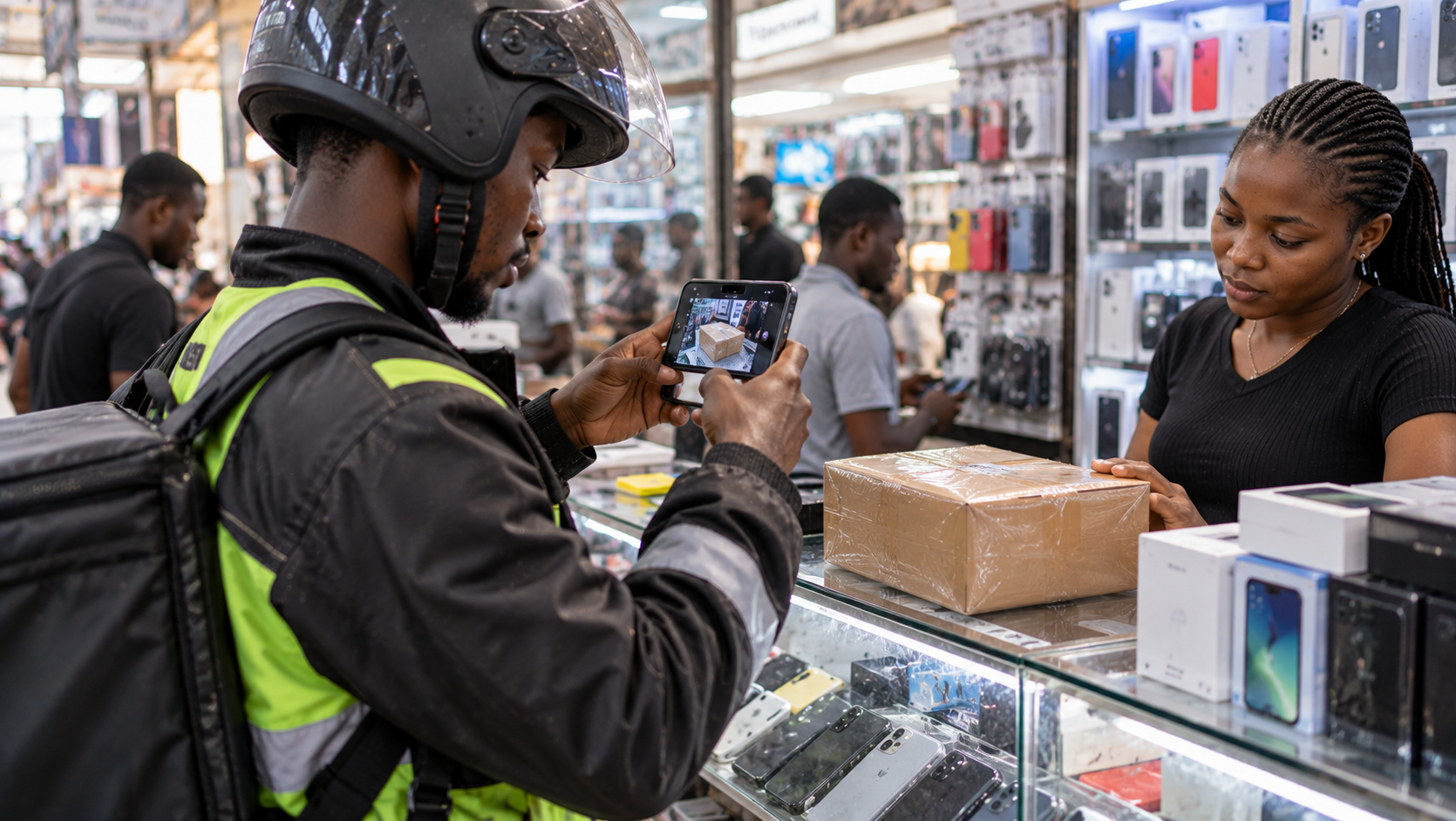
3. A photo of the package at pickup
This shows what was handed over and when. It helps protect you when someone later says the item was already damaged or incomplete.
4. A photo at drop-off
The delivery should not end with, “I dropped it.” There should be a record proof of the handover.
5. Recipient OTP confirmation
The recipient confirms the delivery with a one-time password. That is stronger than a rider typing, “Delivered.”
6. The date and time permanently attached
The record should not disappear into an old chat. It should stay attached to the job, with the relevant updates, photos and confirmation.
Six things. Every job. No exceptions. This is the difference between running courier services in Lagos and simply connecting people to bikes. The message is plain. A serious logistics business needs structure behind every of their riders.
The Same 3:18 p.m. Call, Handled Properly
The vendor calls saying; “Where is my package? Your rider is not picking up.” You open the job. You send the vendor:
The pickup photo
The rider’s name
The last tracked location
The last update time
The agreed price
The next update time
The vendor still wants the package? Of course they do. But now they can see that you are working with facts. Nothing has been lost except time. That changes the conversation.
A vendor who sees clean records is more likely to trust you with a phone, laptop, jewelery, pharma product or expensive fashion order next time. Those are the jobs that build a stronger dispatch business.

Build The Record Before The Problem
Every step in the first 60 minutes depends on what you can prove: where the rider was last seen, what was picked up, how much cash is in the field, and what price the customer agreed to. If those answers live in voice notes and a WhatsApp thread, you spend the first hour guessing. If they live in a record, you spend it acting.
That is what Go SendAm is built for. It is a dispatch operating system that documents every job before the rider moves. The price is locked at intake. Pickup is timestamped. The rider is tracked through the job. Cash collected is logged against the rider who holds it. Delivery closes with proof. So when a rider goes quiet, you do not ask the group chat who saw him last. You open the job and the record tells you.
A verified record also works for you on quiet days. Vendors searching for a carrier they can trust can find verified dispatch operators near them, and your business can be one of them. When you are ready, apply to become a verified dispatch partner. In the first hour, your records do the talking. Build them before you need them.