
Why Lagos Dispatch Managers Lose Money On WhatsApp
You're Not Only Losing Money to Fuel or Touts.
You're Losing It to a System You Built on WhatsApp.
And the worst part? You already knew something was wrong. You just couldn't see where it was coming from.

Running a Lagos dispatch operation from your phone works until it doesn't.
It was a Tuesday. Nothing unusual.
Tunde had been running his dispatch operation in Surulere for four years. Fifteen riders. Decent volume. Busy enough that he couldn't see every delivery — quiet enough that he still thought he could manage it all from his phone.
That afternoon, a vendor from Ikeja sent a delivery job through WhatsApp. The usual: pickup address, drop-off, quick price conversation. The rider went out.
Forty minutes later, Tunde's phone started ringing.

Three people. One delivery. Three different versions of the price that was agreed.
The customer was on the line:"This is not the price we agreed. I'm not paying that."
The rider called next:"Oga, this is what the madam told me."
Then the vendor:"That's not what we discussed at all."
Tunde opened WhatsApp. He scrolled. He tried to remember.
There was no clear record. Just chats. Fragments of conversations that each person remembered differently.
"Three people. One delivery. Three different truths. "
And Tunde in the middle — holding nothing.
So he did what he always did.
He reduced the price. He calmed everyone down. He took the loss. And he moved on.
That evening, he added it to the invisible pile. The pile that never shows up as one big number — but never stops growing.
The Time When You Were the System
There was a time this worked for Tunde.
Two riders. Ten deliveries a day. He knew every vendor by voice. He remembered every price. He could fix every issue before it became a problem because nothing moved without him knowing.
WhatsApp was fast. Calls were fast. His memory was sharp. And the operation ran because Tunde himself was the system.

When you had two riders, you could remember everything. That was the problem you didn't see coming.
But then the business grew.
Five riders became ten. Ten became fifteen. Deliveries multiplied. Vendors multiplied. And the same method that built the operation started breaking it.
"The thing that got you here... is the same thing stopping you from getting there."
Because now, Tunde wasn't running a dispatch operation anymore.
He was running a conversation management service.
Every morning: confirming details on WhatsApp.
Every afternoon: chasing riders for updates.
Every evening: settling disputes nobody can prove.
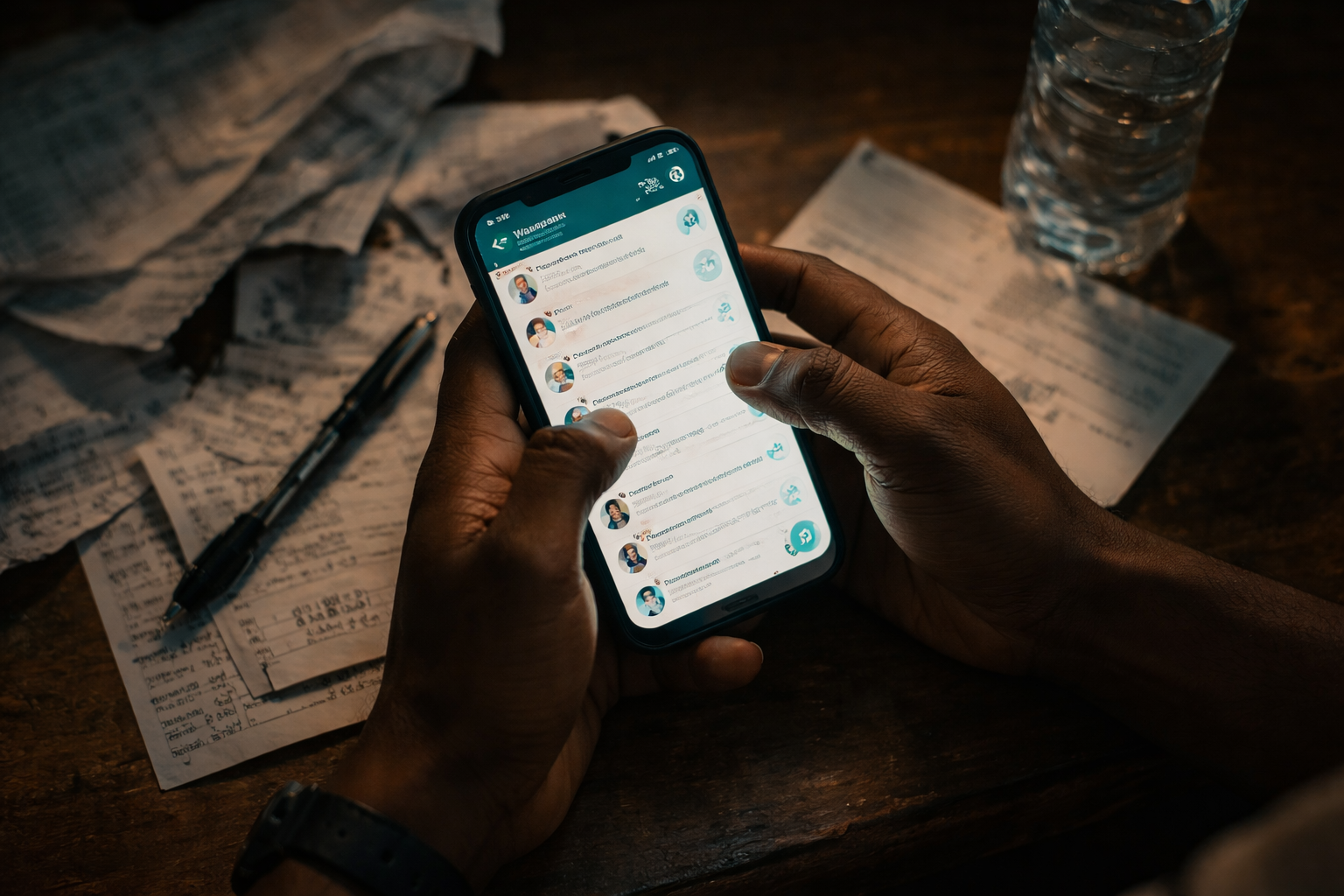
This is not a dashboard. It's a liability. Every chat belongs to whoever remembers it differently.
He wasn't growing. He was firefighting. And the fire never went out because the system kept creating the fire.
The Problem Nobody Says Out Loud
Most dispatch managers in Lagos think their problem is pricing. Or unreliable riders. Or difficult customers.
It's none of those things.
"The problem is that nothing is enforced. Everything is remembered. And memory is not a system."
When a job lives in a WhatsApp chat, it belongs to whoever argues loudest about what was said. The price becomes flexible. The instructions become optional. The delivery becomes a negotiation.
Not because your riders are dishonest. Not because your vendors are unreasonable.
But because the system you're using was built for conversations, not operations.
And here is what that costs you, every single day:
→ Hours spent scrolling chats to confirm details that should already be confirmed.
→ Money quietly surrendered in settlements that feel too small to fight over but add up to thousands every month.
→ Riders who know they can adjust things on the go because nothing locks the job in place.
→ Authority that slowly erodes every time you say 'let's just leave it like that.'
→ A business that can't scale beyond you because you are the only thing holding it together.

The losses don't arrive as one big number. They come quietly, every evening, in settlements nobody calculated.
And the cruellest part?
None of it feels big enough to stop everything and fix. So you keep moving. And the system keeps costing you.
What Changes When Operations Are Enforced
Imagine Tunde's Tuesday but different.
Same vendor. Same Ikeja delivery. Same rider.
But this time, when the vendor sends the job, it doesn't go into a WhatsApp thread. It goes into a structured job card. The price is set. The pickup and drop-off are logged. The instructions are locked. The rider sees exactly what the job requires before he leaves.
The customer receives the delivery. And if they say the price is wrong?
Tunde doesn't argue. He doesn't scroll. He doesn't call three people.
He opens the job. Shows the confirmed price. Shows the timestamp. Shows the proof of delivery.
"The dispute doesn't become emotional. It becomes factual. And factual disputes end in seconds."
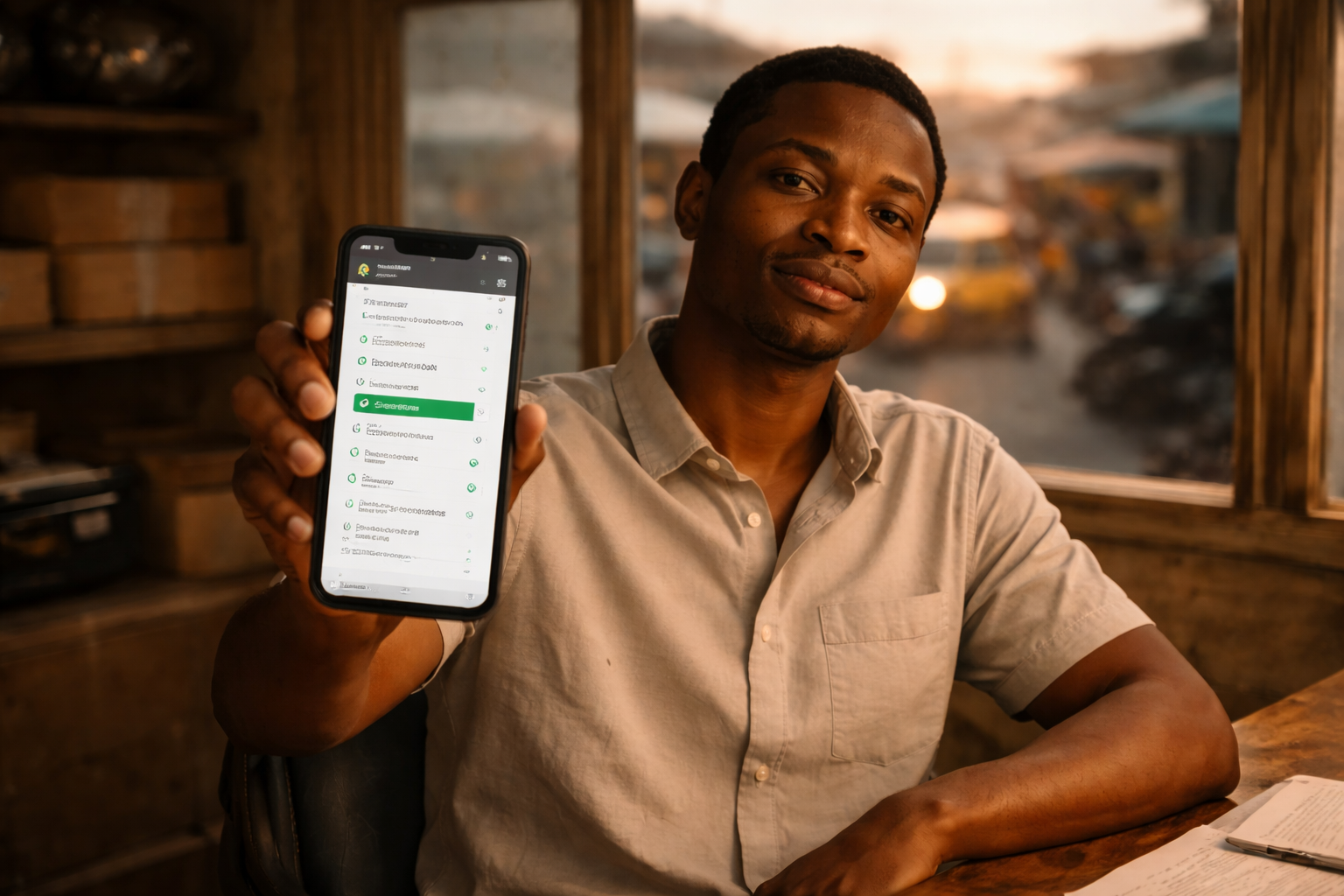
He doesn't argue. He opens the job. When the record is clear, the dispute is already over.
This is What Your Business Should Look Like
→ Price is confirmed before the rider leaves, not remembered after he returns.
→ Every job has a clear record that nobody can rewrite.
→ Riders are tracked. Deliveries are logged. Status updates visible in real time.
→ Proof of delivery captured — photo confirmation, timestamps, everything.
→ Performance data surfaces automatically — best riders, leaking money, ground-level reality.
And critically, Tunde is no longer the system.
The platform is.
Two Ways You Can Run the Same Operation
BEFORE — WhatsApp Operations
Price discussed in chat, remembered differently by everyone
Rider dispatched on trust and verbal agreement
Disputes are settled by whoever argues the loudest
Delivery confirmed by 'he said / she said'
Performance invisible — gut feeling only
You chase updates by calling riders all day
Business cannot grow beyond you
AFTER — Go Send Am Operations
Price is locked in the job card before movement
Rider dispatched with confirmed, logged instructions
Disputes resolved in seconds by referencing the record
Delivery confirmed with photo proof and timestamp
Rider performance is tracked automatically
Live status visible without calling anyone
Business runs with or without you in the room
What Go Send Am Can Do For You
It's a Thursday afternoon in Lagos. You have twenty-three deliveries running.
You are not on the phone.
You are not scrolling through WhatsApp to find out what was agreed six hours ago.
You are not mediating between a customer and a rider.
You are not settling another quiet loss to keep the day moving.
You open your dashboard. You see every job. Every rider's location. Every confirmed price. Every delivery status. In real time.
One of your riders marks a delivery complete.
The photo proof uploads automatically.
The record closes.
The next job is already queued.
A vendor calls to dispute a price. You open the job in four seconds. You show them the confirmed amount. The call ends in ninety seconds.
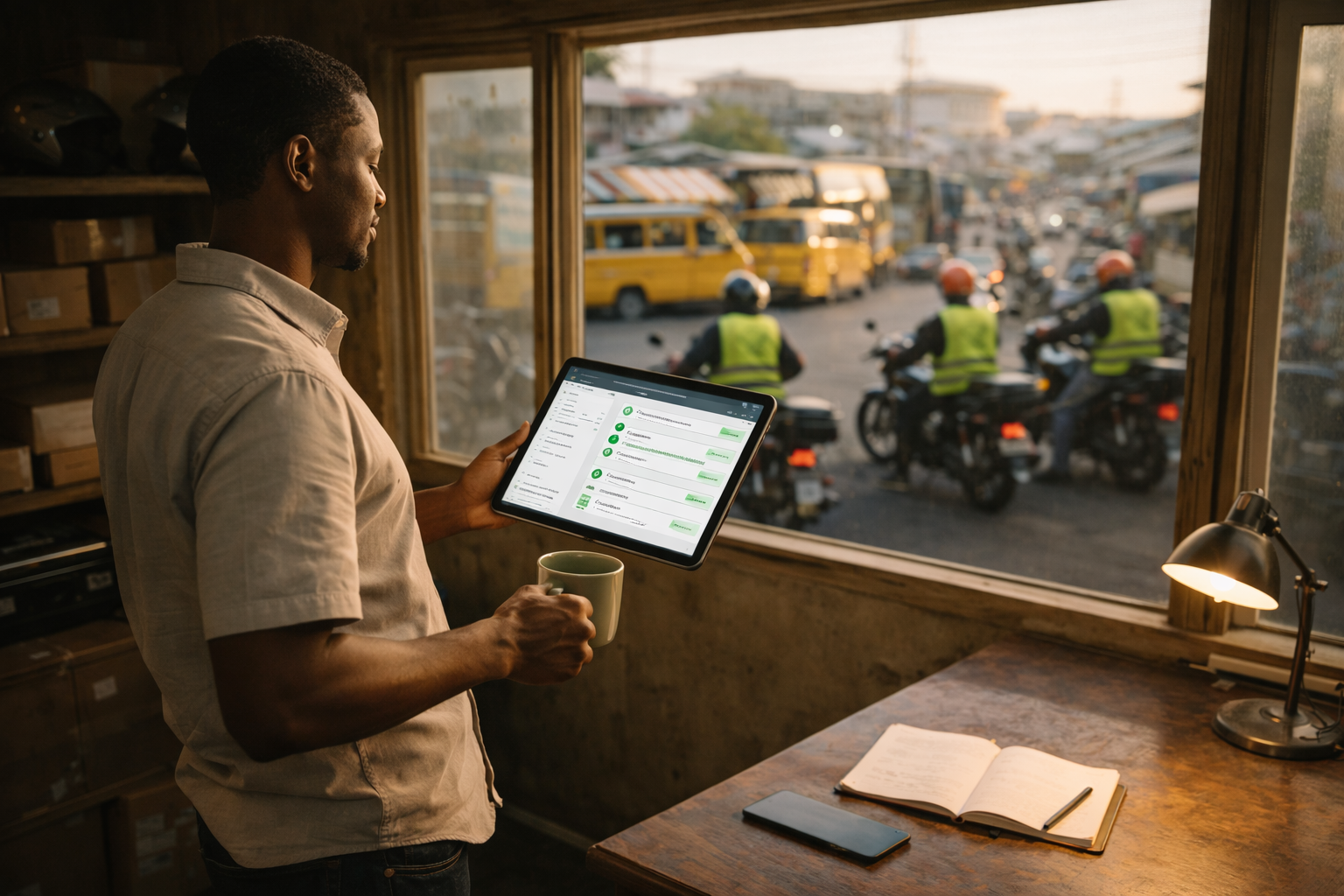
Twenty-three deliveries running. Every job tracked. Zero calls made to find out what's happening.
"You are no longer managing conversations. You are running an operation."
At the end of the month, you review your performance data. You see which riders close the most jobs cleanly. Which routes create the most disputes. Exactly where money was slipping and you fix it with data, not guesswork.
Your business is no longer limited by what you can personally remember, track, and settle.
It is limited only by how big you decide to grow it.
Let's Talk About What You're Already Spending
Right now, you are paying for the WhatsApp system. Just not with a monthly subscription.
You're paying with:
→ The ₦500 – ₦2,000 you quietly discount to end an argument. Multiply that by how many arguments this week alone.
→ The 20–40 minutes every day spent chasing confirmations that should already exist.
→ The deliveries where 'customer wasn't available' was never verified so you can't know if it's true.
→ The riders you've kept too long because you had no performance data to justify the decision.
→ The growth you haven't pursued because you know the current system would break if it got bigger.

No subscription fee. Just a daily invisible invoice paid in discounts, wasted time, and arguments you had to absorb.
Go Send Am doesn't ask you to stop dispatching. It asks you to stop running your operation from chat threads.
You control 100% of your money. The transaction fee is 5% per job, capped at ₦1,000. No subscriptions. No upfront cost. You pay only when jobs run.
Compare that to what the WhatsApp system is already costing you silently, every single day.
What This Really Gives You
Not a new app. Not another platform to manage.
Structure that works while you sleep. Records that speak for themselves. Disputes that stop becoming your personal problem to absorb. A business that grows because the system scales not because you work harder.
"The version of your operation you've been trying to build in your head. This is what it actually looks like when it runs."

Phone silent. Jobs closed. Nothing chased. This is what a day looks like when operations enforce themselves.
Less arguments. Less confusion. Less time spent managing what should manage itself.
More control. More clarity. More confidence to actually grow.
Ready to Stop Managing Conversations?
You don't need a demo call. You don't need to sit through a presentation.
Create one delivery on Go Send Am. Set a confirmed price. Assign a rider. Watch what happens when everything is in one place before the rider moves.
You'll feel the difference in the first job.
Click Here To Start Your First Structured Delivery

A new kind of morning. Every rider has a job card. Every price is confirmed. Every delivery has a record before it moves.
Go Send Am — Operations That Enforce Themselves.
