
Delivery Trouble: How Whatsapp Kills Your Dispatch Operations In Lagos
If you manage more than 5 riders and still coordinate on WhatsApp, at least 4 of these are already happening to you. You are not lazy. You are not bad at operations. Your system is just too small for the operation you are trying to run. WhatsApp helped you start. It helped you find riders, confirm pickups, share addresses, and send quick updates.
But growth changes the game. Once you manage more riders, more vendors, more routes, and more valuable packages, chat threads become a weak place to run serious logistics. WhatsApp is useful for communication. It is not a dispatch control system.
Here are seven signs that your Lagos dispatch operation needs structure
1. You Scroll More Than You Dispatch
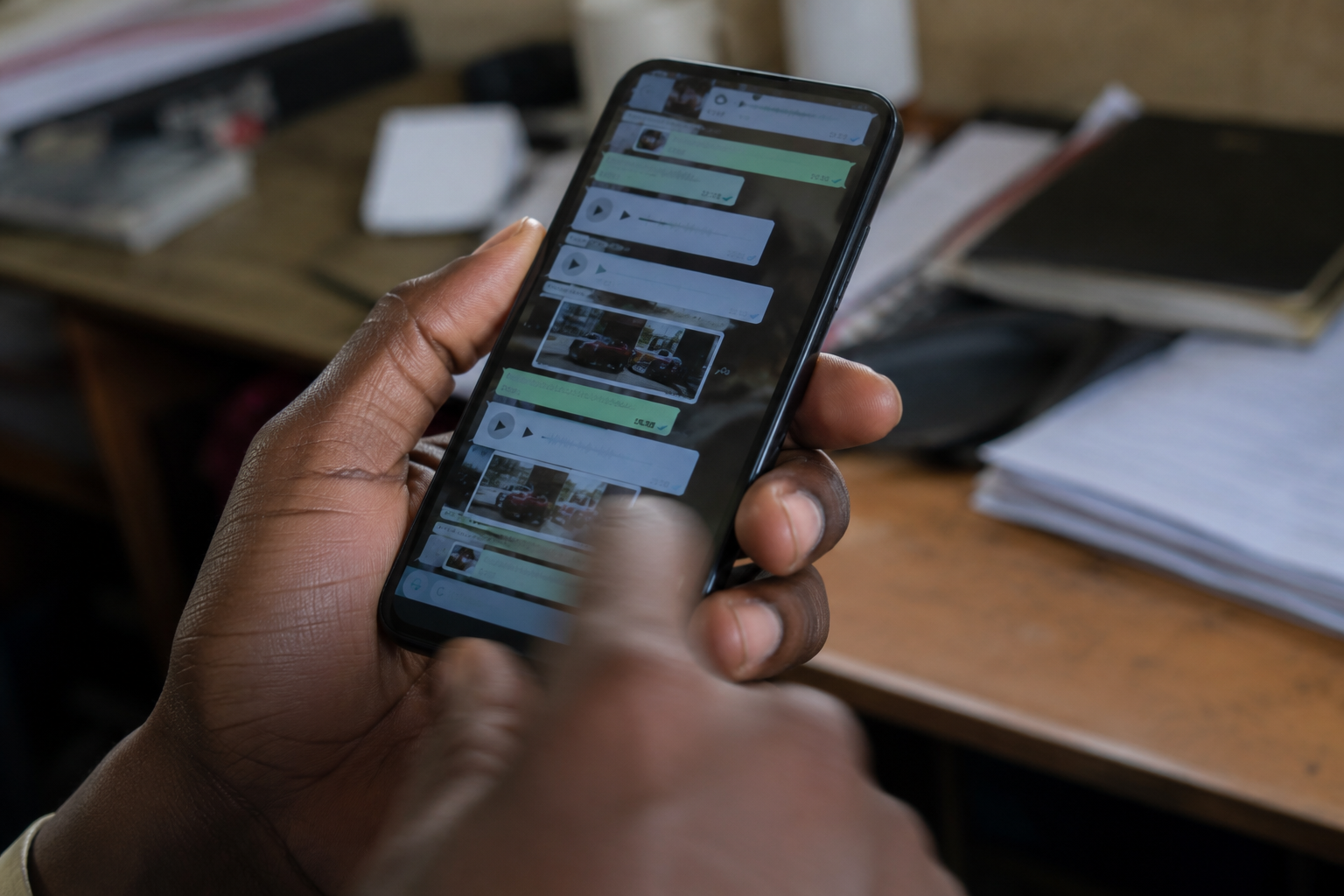
It is 2:15 p.m. in your Surulere office. A vendor sends a Computer Village pickup. Another vendor sends three Yaba deliveries. A rider asks for a new address. A customer sends a voice note. Someone forwards a payment screenshot. Then your phone rings. By the time you find the original job, the rider has already left with the wrong instruction.
This is how jobs get delayed. This is how pickups get missed. This is how riders start working from memory. The problem is not that WhatsApp has messages. The problem is that every message looks like every other message. A delivery address sits beside a greeting. A price sits beside a meme. A customer complaint sits beside a rider asking for fuel money.
You spend ten minutes searching for one detail. Do that several times a day and the cost becomes visible. If you lose 5 minutes each time you search for a job, confirm a price, or resend an address, that time comes directly from sales, rider supervision, and vendor support. Time spent scrolling is not time spent running the business. If your team spends more time searching chats than assigning jobs, you have outgrown WhatsApp.
2. You Do Not Know Where Your Riders Are
A customer calls from Ajah. “Please, where is my package?” You call the rider. No answer. You call again, still nothing. Then you check the last message in the group. “On my way.” That message was sent 45 minutes ago. Was the rider still in Yaba? Was he trapped on the Lekki-Epe Expressway? Did he stop for another job? You do not know.
Now you are guessing. This is the daily reality for many dispatch riders in Lagos. Operators only discover a delay when the customer complains. That is not visibility. That is late information. A rider may be doing honest work and still create a serious customer problem if nobody can see the delivery status. With real-time timeline updates, you can see the delivery from pickup to drop-off. You can give the customer a clear update.
You can spot a route problem before it becomes a missed delivery. You can also see whether a rider has actually left the pickup location. That matters when a phone, laptop, garment, or pharmaceutical product is in transit. If the only tracking system is calling the rider, you are operating blind. This is what customers now expect from a trackable delivery in Lagos: a clear status, a visible route, and fewer promises based on guesswork.

3. “I Never Got It” Claims Eat Your Margins
A phone repair shop in Computer Village sends a repaired iPhone to Lekki. Your rider said it was delivered. The customer says it was not. Your rider sends a blurry photo from a WhatsApp chat. The customer says the photo does not prove anything. Your vendor calls you.
You search through two groups and a private chat. The photo has no clear timestamp. There is no recipient confirmation. There is no reliable record tying the handover to the job. So what happens? You negotiate. You apologise. You offer a discount. Sometimes, you pay for a replacement just to protect the relationship.
The individual settlement may look small compared with the full value of the delivery. But repeated settlements quietly reduce your profit. A ₦2,000 concession here. A free redelivery there. A transport refund after a failed argument. The money leaves in pieces, so you do not feel the loss immediately. Structured proof of delivery changes the conversation.
A Proper Record Should Show:
- A photo at pickup.
- A photo at drop-off.
- The delivery timestamp.
- The recipient’s OTP confirmation.
- The rider and carrier connected to the job.
Go SendAm provides timestamped delivery records and OTP confirmation for completed deliveries. That does not make every dispute impossible. It makes the facts easier to check. A delivery should not depend on who tells the most convincing story.

4. Doorstep Price Arguments Keep Turning Into Failed Deliveries
It is 5:40 p.m. in Lekki. The rider reaches the customer’s address. The customer says the delivery fee was ₦4,000. The rider says it is ₦6,000 because traffic was bad. The vendor says the customer agreed to pay the delivery. Nobody can show the final price. The rider waits. The customer refuses. The parcel returns to the vendor.
Now One Delivery Has Created Several Problems:
- The rider loses time.
- The customer loses trust.
- The vendor handles another complaint.
- The return trip creates another cost.
- Every other customer may receive the parcel late.
This is not only a rider problem. It is a process problem. When the price is discussed across calls and chats, people remember different versions. A structured job should show the pickup, drop-off, package details, and agreed price before movement.
Go SendAm allows vendors and carriers to bargain, counter, and lock the price before pickup. No surprise negotiation at the gate. No “that is not what we agreed.” No rider travelling across Lagos for a job that was never properly confirmed. If the price is not locked before pickup, the delivery is not ready.

5. Sunday Night Reconciliation Is Guesswork
Sunday night. Your riders have closed the week. You open WhatsApp. Then your notebook. Then your bank alerts. Then another spreadsheet.
You Are Trying To Match:
- Which rider handled each job.
- Which vendor paid.
- Which customer paid cash.
- Which delivery failed.
- Which rider is owed.
- Which return trip was approved.
- Which price changed during the day.
One job says ₦5,000 in a chat. Your notebook says ₦4,500. The rider says the customer paid ₦6,000. You are now investigating your own business. This is silent labour. Nobody sends you an invoice for it. But it takes your evening, delays reporting, and makes it harder to know which routes and customers are actually profitable. Structured job records give every delivery a place.
The job has its own details. The price stays attached to it. The status is clear. The proof is searchable. The payout can be checked against the completed job. The goal is not to make reconciliation magically take ten minutes in every operation. The goal is to stop rebuilding the truth from scattered conversations. Your business records should not depend on your memory or your oldest WhatsApp group

6. High-Value Vendors Stop Trusting You With Their Products
A fashion vendor in Lagos Island sends wedding outfits worth more than a hundred thousand naira. A laptop seller in Ikeja sends a repaired MacBook to Ajah. A dry cleaner in Surulere sends an agbada for an event happening that evening. These vendors are not only buying movement. They are buying confidence.
They want to know who is carrying the item. They want to know where the rider is. They want proof that the package was picked up correctly. They want a record if the customer later says, “I never received it.” If your answer is, “I will call the rider,” you sound informal when the product is not informal.
This is where many courier services in Lagos lose valuable accounts. The vendor finds another operator who can provide clearer records. The loss is quiet. There may be no angry message. The vendor simply stops sending jobs. You lose the delivery fee. Then you lose the repeat customer.
A professional delivery operation should be able to show accountability before the package moves, during transit, and after handover. That is especially important for a computer village delivery service or any safe courier for electronics. High-value vendors do not want hope. They want a process they can inspect.
7. Your Return Rate Keeps Creeping Up
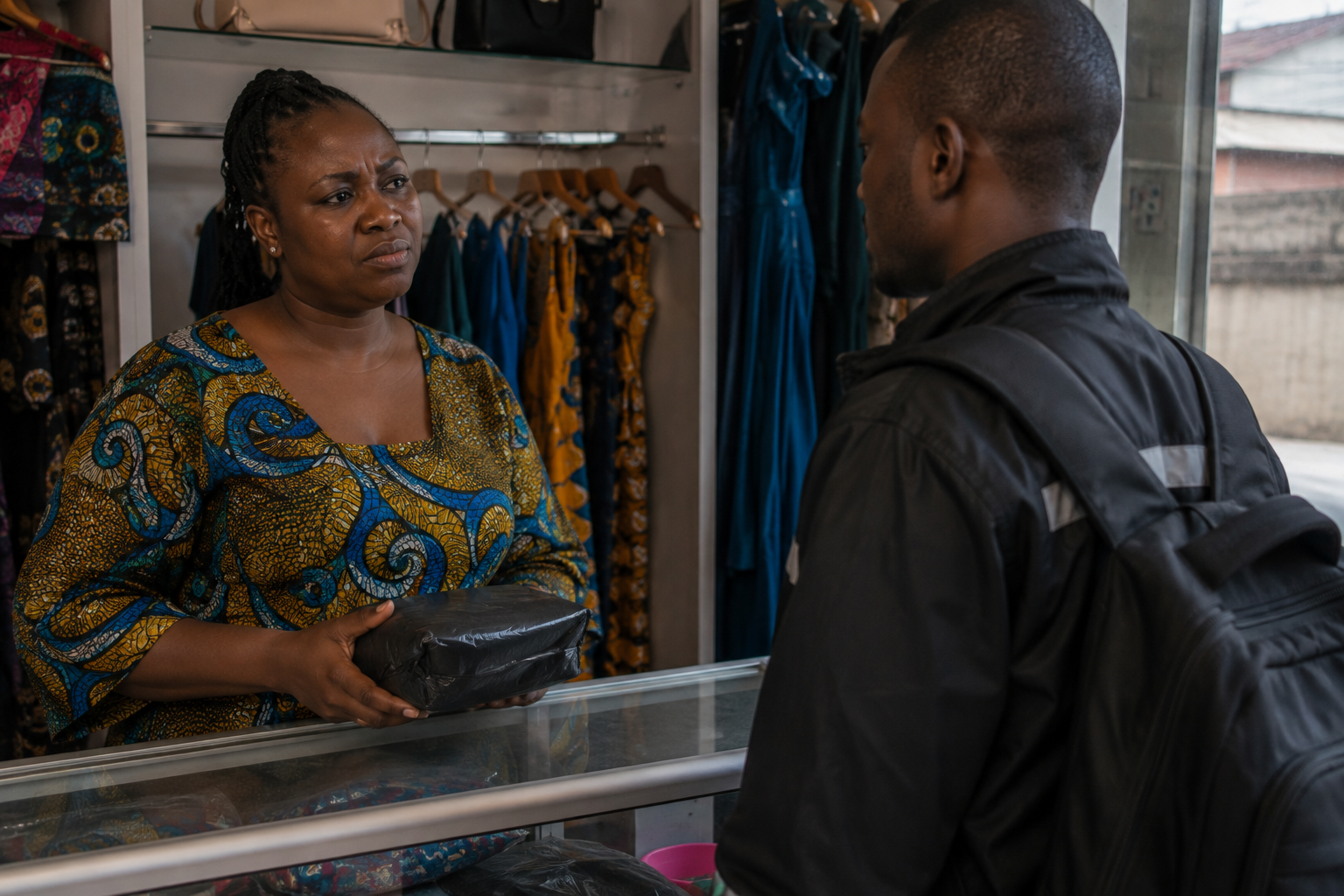
A delivery fails in Yaba. The customer was not available. Another fails in Ajah. The address was unclear. A third customer says the rider called once and left. You blame difficult customers. Sometimes, that is fair. But if the same problems keep repeating, the operation needs to look at the journey.
Was the address confirmed? Did the customer know the rider was coming? Could the customer track the delivery? Was there a clear arrival update? Was the failed attempt documented? One failed delivery creates more than one cost. There is the rider’s time. There is the return trip. There is the vendor’s follow-up.
There is the customer’s frustration. There is the chance that the buyer cancels. There is the damage to the vendor’s reputation. If this happens repeatedly, the delivery fee is no longer the full cost of the job. Structured journey control helps reduce confusion. The customer receives updates. The vendor can see the delivery status.
The rider follows clear job details. Failed attempts can be recorded instead of argued about. Go SendAm’s real-time tracking and delivery records are built to give vendors and customers visibility from pickup to drop-off. Returns are not always a customer problem. Sometimes they are an information problem.

Go SendAm: A Professional Operating System For Lagos Dispatch Fleets
You do not need more WhatsApp groups. You need a clear operating layer for your dispatch business. Go SendAm connects vendors and everyday sellers with verified dispatch companies in Lagos.
We do not own the riders. We verify the dispatch companies on the platform against business registration, identity, physical office details, and delivery history, which gives you a clearer accountability chain than a random rider number.
With Go SendAm, Your Operation Gets:
- Structured jobs with pickup, drop-off, package details, and instructions.
- Pre-agreed pricing before pickup.
- Timeline updates for active deliveries.
- Photo proof at pickup and drop-off.
- Recipient OTP confirmation at delivery.
- Permanent, timestamped delivery records.
- Verified dispatch companies behind the riders handling the job.
Vendors use the platform for free. There is no sign-up fee, monthly plan, or per-delivery charge for vendors. You agree the carrier’s delivery fee before the job begins.

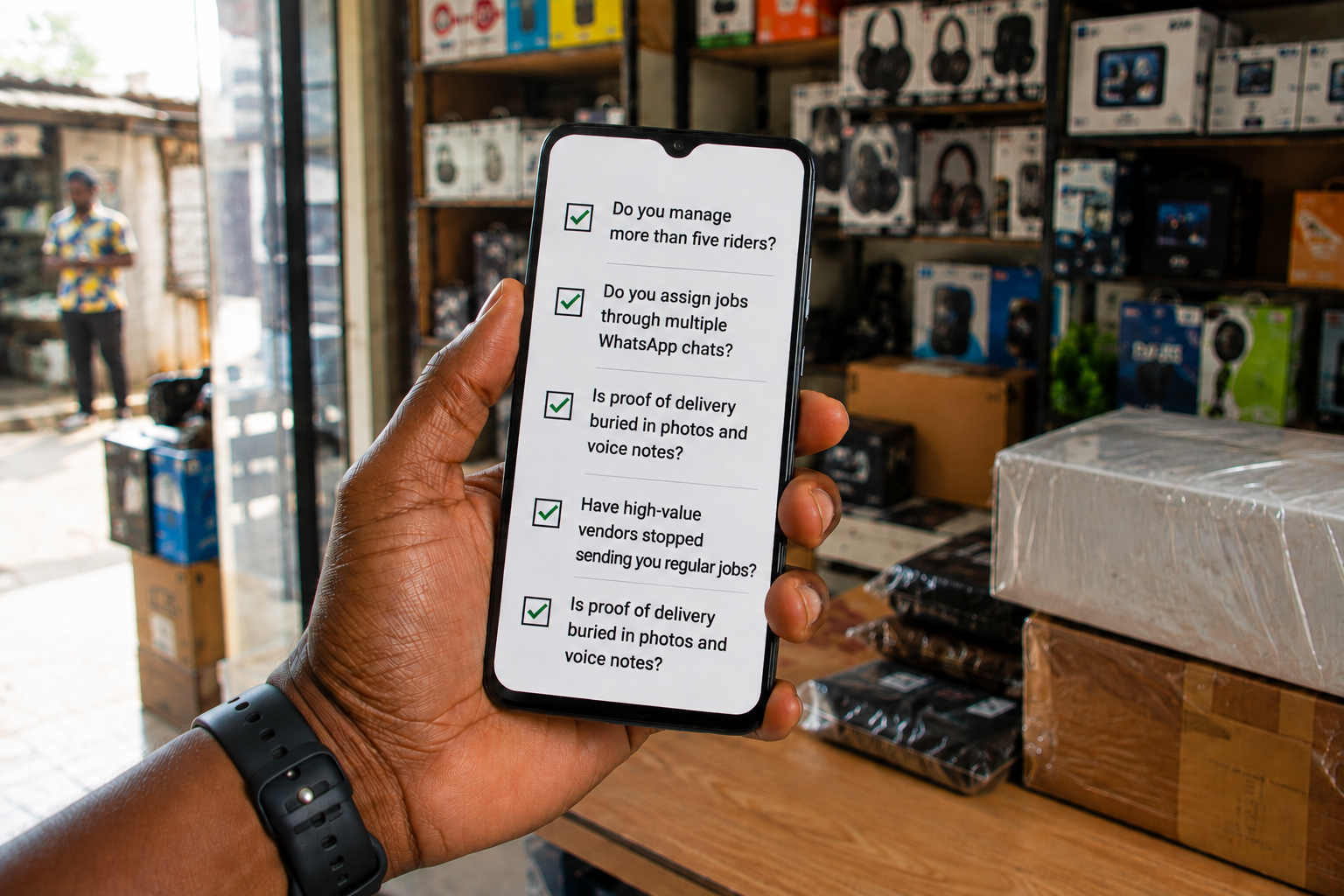
Quick Operator Takeaway Checklist: Screenshot This
Answer “Yes” or “No”.
- Do you manage more than five riders?
- Do you assign jobs through multiple WhatsApp chats?
- Do you search old messages for pickup details?
- Do customers call because you cannot show live location?
- Do riders and customers argue about the agreed price?
- Is proof of delivery buried in photos and voice notes?
- Do you spend evenings matching chats, payments, and rider payouts?
- Have high-value vendors stopped sending you regular jobs?
- Do failed deliveries often end with “customer was not available”?
- Can you produce a complete delivery record in under a minute?
If you answered “Yes” to four or more, your operation has outgrown WhatsApp. Do not wait for one expensive package to prove it. Before you hand a valuable package to any rider, check who stands behind that rider.
Read Next:
Rider Risk: The Questions That Separate a Real Rider From a Thief
(Rider-Risk-The-Questions-That-Separate-a-Real-Rider-From-a-Thief).
Return-Rate Blind Spot: The Fix No Lagos Operator Wants to Admit
(Return-Rate-Blind-Spot-The-Fix-No-Lagos-Operator-Wants-to-Admit).
These should become part of your operating playbook. Because the next stage of Lagos logistics will not belong to the operator with the most riders, it will belong to the operator with the clearest process. Stop managing conversations. Start running a delivery operation. See if you qualify to be a partner with us and start building a more controlled Lagos delivery operation with Go SendAm - https://gosendam.com.
